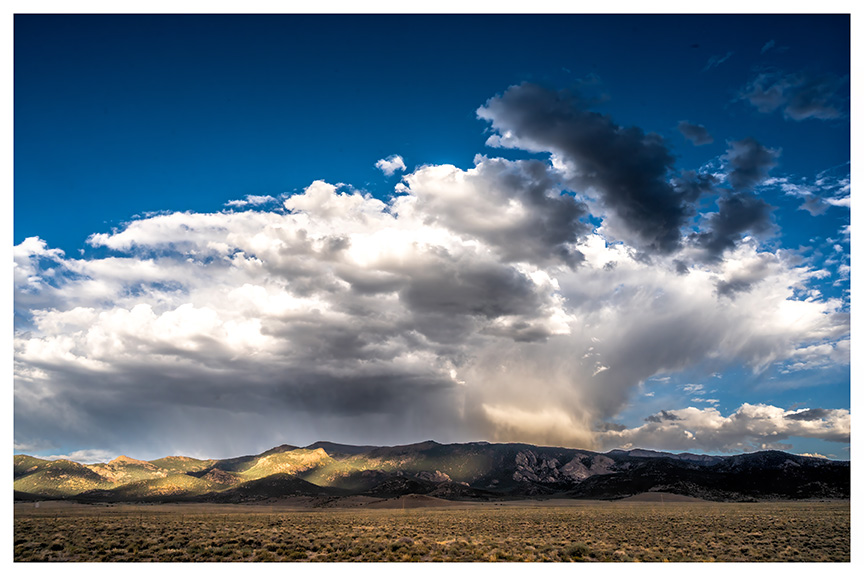
I have a pretty sweet camera, even if it’s aging a bit now: a Nikon Z6 (first generation) mirrorless, with the excellent original Nikkor 24-70mm zoom lens, as well as a very serviceable Tamron 70-300 telephoto zoom for long shots.
Frequently, however, this is not my best camera; that distinction more often goes to my other instrument, the Samsung S23 Ultra phone (on which, coincidentally, I am currently listening to Spotify). There’s a sort-of old saying that goes, “The best camera is the one you have on you.” And the times in a given week when I’m more than a body length from my phone could probably be counted on one hand.
In contrast, the Nikon usually has lots of excuses to be slacking at home — which is to say, of course, they’re my excuses for leaving it there. It was expensive (at least, by the yardstick of my financial resources), so I hate to take it places where it might get damaged or stolen. For instance, in March of last year, I took Carol to Thailand for a couple weeks to celebrate a milestone birthday… and left the camera behind for its own safety. So all those beautiful temples, artworks, cultural treasures, etc. ended up on my Samsung.
Also, well, it’s a lot to carry. Back in 2020 I bravely took the Nikon along on a multi-day tramp through some rugged New Zealand terrain, and humping the thing up and down the sides of volcanoes was a genuine pain in the ass. (I had it hooked onto one of those clever Peak Design pack strap mounts, and it felt like I was carrying an office safe around on my chest.)
Don’t get me wrong. By this point, I’ve taken many thousands of photos with the Z6; I try to take it along as often as feasible (subject to the aforementioned restrictions) when I think there might be good photo opportunities in the offing. But the Nikon has surely missed many more great moments than it has seen. As Ferris Bueller sagely observed, life comes at you pretty fast, and photo-worthy moments don’t always announce their imminence in advance.
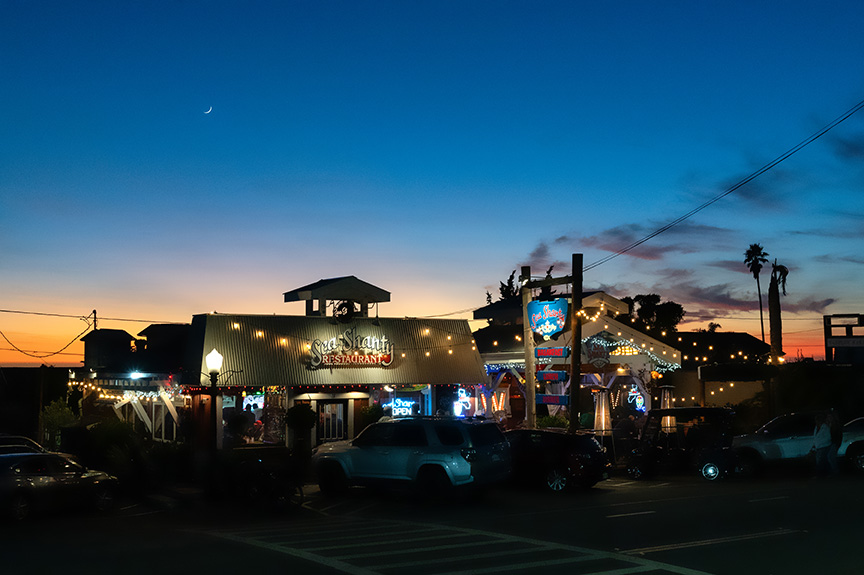
Fortunately, as it turns out, the ubiquity of my little Samsung phone has rendered the frequent absence of the Nikon less consequential than you might imagine. As you’ve no doubt discovered yourself, modern phones take surprisingly good pictures. The photo at the top of the article, for instance — of the Sea Shanty restaurant in Cayucos, CA — was taken with my phone, and I was happy enough with it to include it in my portfolio at Marina Square gallery. In fact, my two biggest photo sales to date both have come from cell phone photos.
That picture above, incidentally, shows one of the real strengths of recent cell phone cameras: excellent low-light performance. Can I get great low-light pictures from my big camera? Sure, with some diddling around. The phone makes them effortless.
On the other hand, the existence of editing programs like Adobe’s Lightroom and Photoshop means there’s hope even for not-so-great phone snapshots. For instance, here’s a quick pic I took while I was wandering around, agog, at the Aerospace Museum of California (I’m kind of an airplane geek):

While the plane is awesome — an F-106 Delta Dart from the famed Century Series of early combat jets — the photo is a dog, right? Other planes crowd in, there are distracting shadows, the color’s washed out, and so on. But a little bit of tarting up in Photoshop, and we end up with something like this:
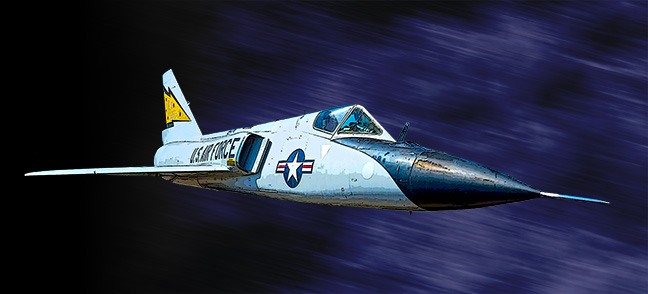
Sure, it won’t win any photo competitions. But it’s still pretty cool! You could use an image like this for a comic book illustration, a sticker, a coffee mug, maybe a desk decoration for the aerospace dweeb in your life. Lots of possibilities there.
Do you like to go to concerts, but end up too far away from the stage to get good, sharp photos with your phone? Don’t throw those murky pictures away! A couple years ago, Carol and I went to the UK’s Sidmouth Folk Festival, and I got a bunch of long-distance images of the performers. Zoomed in enough to yield interesting compositions, they lacked the resolution to make “respectable” photos; but even at less-than-ideal resolution, they can make excellent posters:
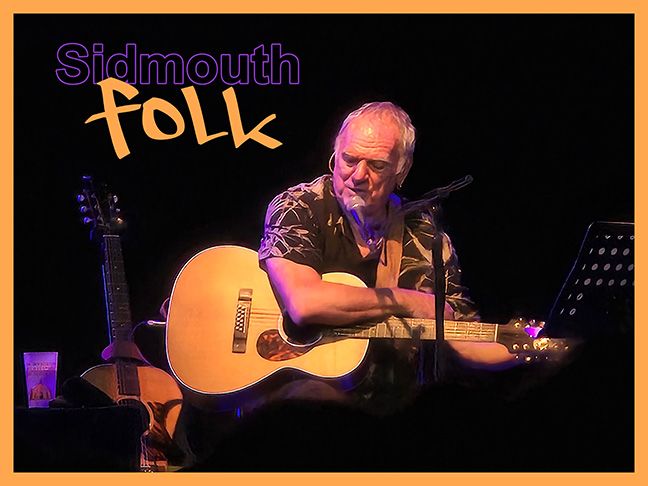
I tight-cropped and then lightly posterized this photo of the great Ralph McTell using the Photoshop dry brush filter, so the lack of resolution looks perfectly natural, even (dare I say) artistic. Throw in some text and a nice border, and if I want I can now blow this up into a poster and put it on the wall to have as a permanent reminder of a great memory.
Which, by the way, leads me to this postscript:
Whether you take your photos with a big honking DSLR or mirrorless camera, your cell phone, a hipster Brownie camera, or a classic Hasselblad — whatever — they’re not much worth keeping in the long run if you don’t actually go back and look at them from time to time. Set up your photos for long-term success: put them where you can easily see them often. Print them. Put them on your walls. Post ’em on social media. Get one of those cool digital frames — or even two! — and cram them full of your old snapshots.
It’s your history. You worked hard to experience it. Now go back and enjoy it.