When I left my office job in 1985 to go to UVa for Art History grad school, my motivation was to study Gothic architecture. Since then, my life has gone through unimagined twists and turns; but while my highest fine arts preferences now lodge firmly within mid-20th Century Abstract Expressionism, I still love medieval architecture.
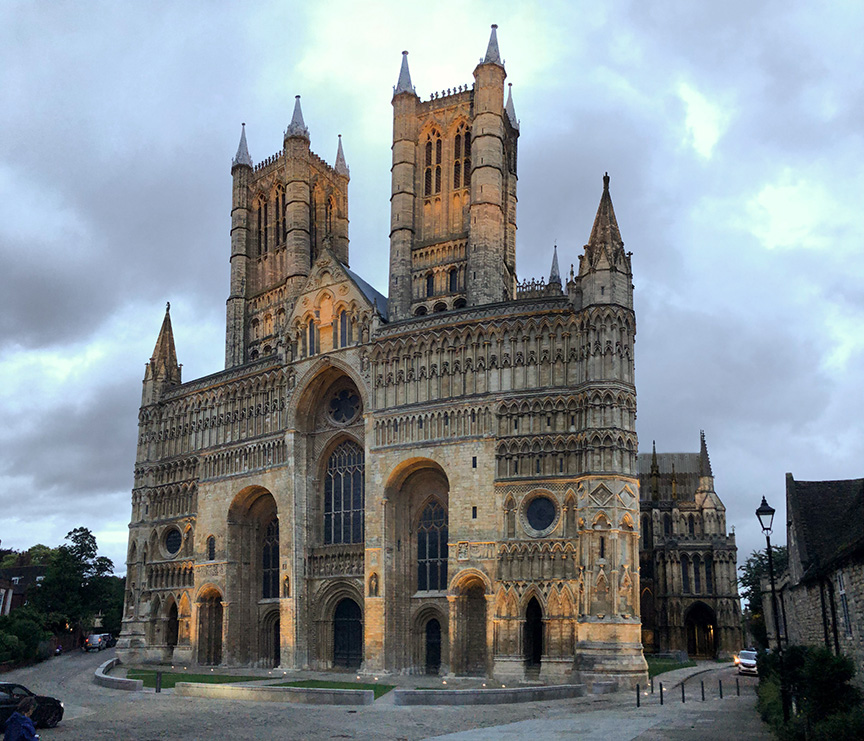
One of my favorite expressions of the Gothic style is Lincoln Cathedral (façade, top photo), in the lovely UK town of the same name, north of Cambridge and east of Manchester. The cathedral was built starting in 1072, then it burned (like so many medieval churches) and was rebuilt in the English high gothic style beginning in the late 12th Century.
It’s a doozie.
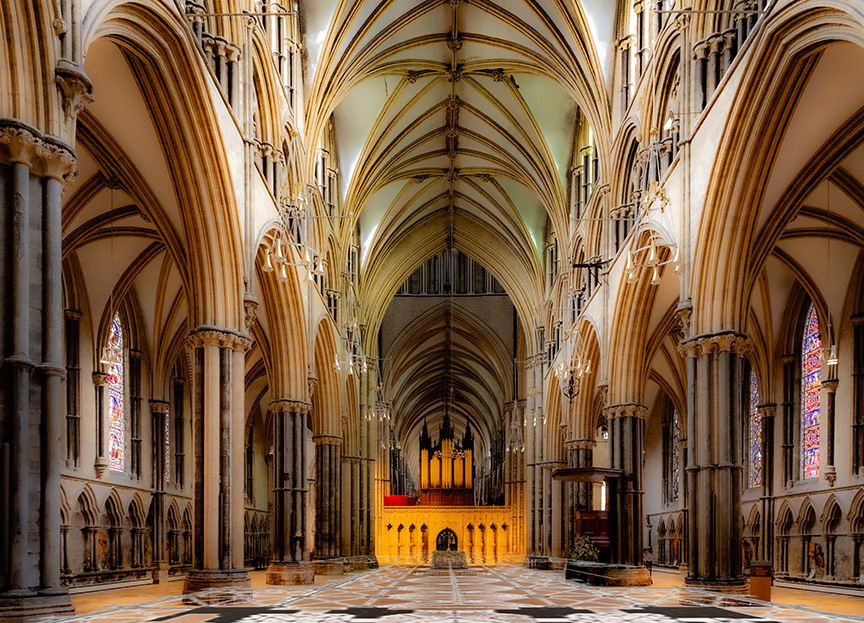
In August 2023, Carol and I visited the town, and I took a host of photos that form the basis of a photo collage I’ll be hanging in the Morro Bay Art Association’s next show, Orange Crush. Two of the pictures that will anchor the collage are shown above and below — the façade, an evening shot with lowering rain clouds, and the nave, taken the following day under cover from cloudy skies.
The pronounced orange tones in the latter photo (and in other photos I took that day) were neither an invention of my camera, nor a gift of photoshop; they were true to the interior colors of the church.
On the other hand, the grid you see on the floor of the nave is an addition of mine. I took an 18th Century ground plan of the site, and stretched it out on the floor to hint at some of the design internals of the church. In some of the other Lincoln photos that make up my MBAA collage, I have added similar sorts of over/underlayment to highlight other features of the cathedral that are not obvious to the casual visitor.
One of the remarkable aspects of late medieval churches is the sophistication of both physical and programmatic design. In the case of Lincoln, those are augmented as well by political aspects. One of the original copies of the Magna Carta, for instance, was allocated to the church, where it still resides. In the high middle ages, great bishoprics such as Lincoln were important seats of political influence.
Next post, I will include a couple more photos from the Lincoln collage, and in a subsequent post, the entire piece. If you’re a fan of medieval churches, be sure to stay tuned.